Advertising disclosure: this review contains affiliate links. We may earn a commission at no extra cost to you. That never changes our verdict. How we fund our work
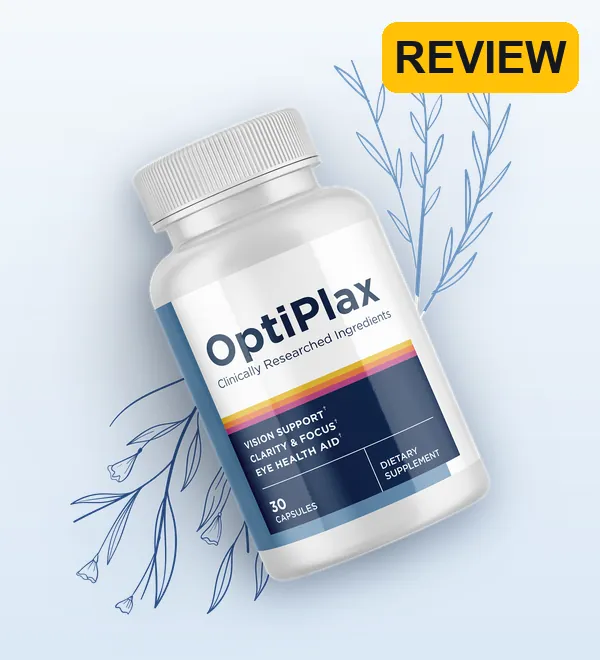
OptiPlax Review 2026: The Seaweed Label, Price and Who It Suits
4.7/5 ★★★★★★★★★★ A one-a-day sea formula with fair terms and one open question: the doses
One capsule a day, nine algae and plant ingredients in a 500 mg blend, sold as daily support for clarity and focus. Official site only, one-time payment, 60-day money-back guarantee.
Nine algae and plant ingredients, no stimulant, no subscription. Astaxanthin, the ingredient in this formula with the most research on tired eyes, sits third on the label, and the 60-day refund covers opened bottles. What we cannot tell you is how much of each ingredient is inside. The label does not say.
Editorial score; prices read October 20, 2026.⚠️ See an eye doctor right away if
- Sudden vision loss in one eye or both, even if it comes back.
- A curtain or shadow across part of what you see.
- New flashes of light or a sudden shower of floaters.
- Eye pain, or a red eye with blurred vision.
- Double vision.
These are exam-room problems, not supplement problems [12]. No capsule replaces the dilated eye exam the National Eye Institute asks adults over 60 to have every 1 to 2 years [11].
What Is OptiPlax, and What Does the Maker Claim?
OptiPlax is a capsule supplement sold for the eyes: 30 capsules a bottle, one a day [1]. The label says "Vision Support", "Clarity & Focus", "Eye Health Aid" and "Clinically Researched Ingredients". That last phrase covers the ingredients, not the finished product, which as far as we can find has never been studied.
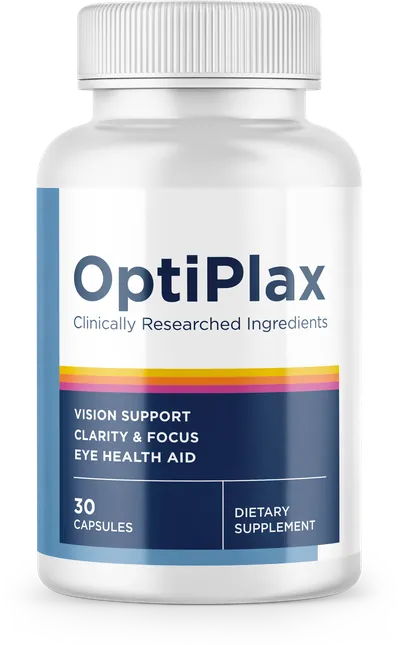
The maker's explanation says the blend "supports the natural cleansing processes of the eye" and describes a "plaque" that builds up in eye tissues, leading to blurriness and strain. No published study shows that this capsule, or any supplement, removes deposits from the eye.
So what is "eye plaque", really?
The closest thing in real eye medicine is drusen: small yellow deposits under the retina, common after 50 and a possible early sign of age-related macular degeneration. The American Academy of Ophthalmology is blunt: getting rid of drusen does not improve the condition they signal [8]. The one supplement with strong evidence there is the AREDS2 vitamin formula [9][10], and OptiPlax contains none of its nutrients. Read it as a daily sea-nutrient formula for tired eyes, not as a cleaner.
Who makes it, and is it the Dell computer?
The distributor is OptiPlax, 285 Northeast Ave, Tallmadge, OH 44278, the address on the label [1]; checkout runs through BuyGoods. The label also claims a GMP-certified, FDA-registered US facility; "FDA registered" means the facility is on the FDA's list, not that the FDA reviewed the product, which it does not do for any supplement [14].
And no, OptiPlax is not OptiPlex, Dell's desktop computer.
OptiPlax Ingredients: The Full Label, Transcribed
Most pages that review OptiPlax describe a formula that is not on the bottle: lutein, bilberry, saffron, invented milligram doses. We copied the Supplement Facts panel word for word [1].
Supplement Facts
Serving Size: 1 Capsule
Servings Per Container: 30
† Daily Value not established.
Other ingredients: Gelatin (capsule), Brown Rice Flour, Silicon Dioxide.
Suggested use: take 1 capsule daily with 6 to 8 oz of water, or as directed by a healthcare professional.
Transcribed by our team from the OptiPlax label, October 20, 2026. Not a photo of the label.
What the 500 mg blend tells you
A "proprietary blend" lists ingredients without saying how much of each is inside. FDA rules require only the total weight and a descending order by weight [3]. So two things are certain: 500 mg of actives, and kelp powder weighs the most.
Here is the arithmetic the sales page skips. The astaxanthin is a 2% powder, third of nine, so it cannot exceed a third of the blend: under 167 mg of powder, less than 3.4 mg of astaxanthin, possibly far less. The studies on tired eyes used 4 mg or 12 mg a day [4]. So this is not a high-dose astaxanthin product.
The capsule is gelatin, so the product is not vegan; brown rice flour and silicon dioxide are the only other ingredients.
The nine ingredients, in four groups
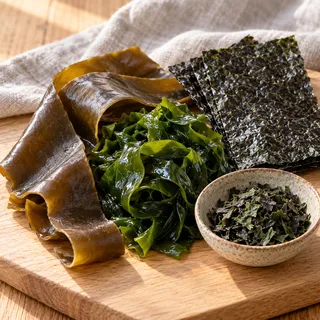
Kelp, wakame, Ecklonia cava and nori four brown and red seaweeds, the bulk of the blend
Kelp appears twice: as a leaf powder, the heaviest ingredient, and as an extract standardized to 10% fucoxanthin, a pigment studied for metabolism, not vision. Nori is the red seaweed around sushi.
They bring minerals, above all iodine. No trial has tested any of them for eyesight; the iodine gets its own box below.
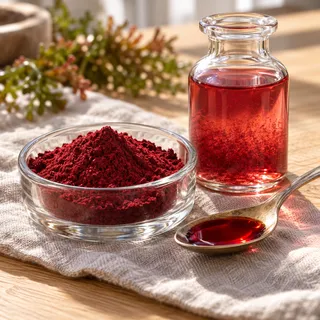
Astaxanthin 2% from Haematococcus pluvialis algae, third by weight
The red pigment that colors salmon, made by a freshwater alga. The one ingredient in this formula with human trials on screen-tired eyes.
A 2020 review in Marine Drugs covers trials on eye strain: adults over 40 took 4 mg or 12 mg a day for 28 days, and office workers at screens were studied too. Results favored astaxanthin, though the authors want longer trials to settle the dose [4].
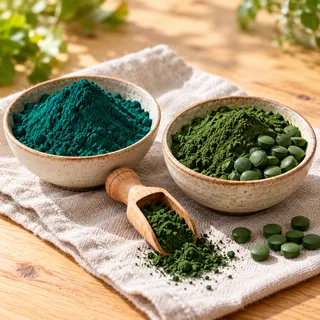
Chlorella and spirulina two freshwater micro-algae
Green powders sold as general nutrition: protein, iron, B vitamins. Neither has a vision trial.
Harvard Health notes that spirulina may worsen symptoms of an autoimmune disorder and can interfere with blood clotting [13]; see the side effects section.

Sea buckthorn oil last on the list, the lightest ingredient
Oil from the orange berries of a coastal shrub, rich in omega-7 fatty acids and vitamin E.
A Finnish randomized trial gave adults with dry eye 2 grams of the oil a day for three months, with better tear film than placebo [5]. That is 2,000 mg; in a 500 mg capsule the oil is a trace. If dry eye is your main concern, ask your eye doctor first; OptiPlax is built around tired eyes.
Our read. Astaxanthin carries the evidence for "clarity and focus"; the rest is decent general nutrition with no vision data. A reasonable thing to take daily, with realistic expectations.
Seaweed, Iodine and Your Thyroid: The Box Nobody Else Writes
Five of the nine lines on the label are seaweed (kelp twice, wakame, Ecklonia cava, nori), the richest natural source of iodine, and the label lists no iodine amount.
The numbers to know. Adults need about 150 micrograms of iodine a day; the NIH sets the upper limit at 1,100 micrograms. Kelp is the wild card: its iodine content swings from batch to batch, and kelp supplements have been found to deliver far more than their labels suggest [6]. With 500 mg of mostly seaweed per capsule, OptiPlax almost certainly adds iodine to your day; how much, nobody outside the factory knows.
Why your thyroid cares. A healthy gland passes a surplus in the urine; in thyroid disease, the American Thyroid Association notes, too much iodine can push the gland toward either overactivity or underactivity [7]. If you take levothyroxine, have Hashimoto's, Graves', nodules or a thyroid surgery history, or already take a multivitamin with iodine, show this label to your doctor before you order.
Allergies. Seaweed is not shellfish, but a seafood or iodine sensitivity calls for the same caution as sushi night.
Pregnancy. Iodine intake is tightly managed in pregnancy and nursing [6], so ask a physician first; the same goes for anyone under 18.
With a healthy thyroid, none of this is a reason to avoid OptiPlax. It is a reason to read before you buy.
How to Take OptiPlax: One Capsule, With a Meal That Has Some Fat
The label keeps it short: one capsule daily with 6 to 8 ounces of water, or as a healthcare professional directs [1]. One practical note: astaxanthin and the vitamin E in sea buckthorn oil are fat-soluble and absorb better with dietary fat, so breakfast eggs beat water on an empty stomach.
What to expect
No date, then: the finished product has no study, and the astaxanthin trials ran about four weeks [4]. A fair plan: before the first capsule, write down how your eyes feel at the end of a long screen day. Repeat at week 4 and week 7. A difference you can describe? Keep going. Nothing? The guarantee window is still open at day 50.
Pros and Cons of OptiPlax
What we like
- One capsule a day: the simplest routine in the category.
- Astaxanthin, the ingredient in this formula with the most research on tired eyes, is third on the label [4].
- No stimulants, no artificial colors on the label.
- One-time payment, no autoship, 60-day guarantee that covers opened bottles.
- Named US distributor in Tallmadge, Ohio; known retailer (BuyGoods).
- $49 a bottle on the six-bottle kit; 3 and 6 bottle kits ship free in the US.
What to weigh before buying
- Proprietary blend: no individual doses; by the math, astaxanthin is below study doses [3][4].
- Four seaweeds, no iodine figure; thyroid patients need a doctor's go-ahead [6][7].
- Gelatin capsule: not vegan.
- Two-bottle kit adds $9.99 shipping; no single-bottle option.
- Official site only, with look-alike domains around it.
- Not a replacement for glasses, eye drops or the yearly eye exam.
OptiPlax Price: Kits, Shipping and the Real Cost Per Day
Prices read on the official order page, October 20, 2026. Each bottle is a 30-day supply; the smallest order is two bottles.
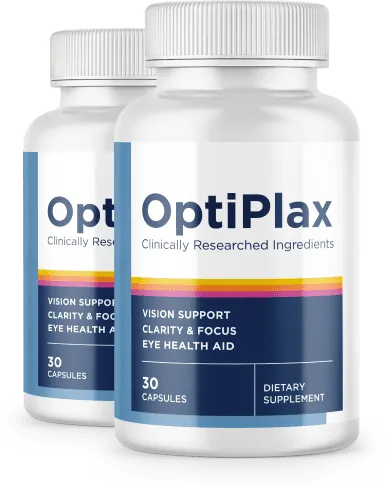 $158
2 bottles · 60 days · about $2.63 a day
$79 per bottle
+ $9.99 US shipping
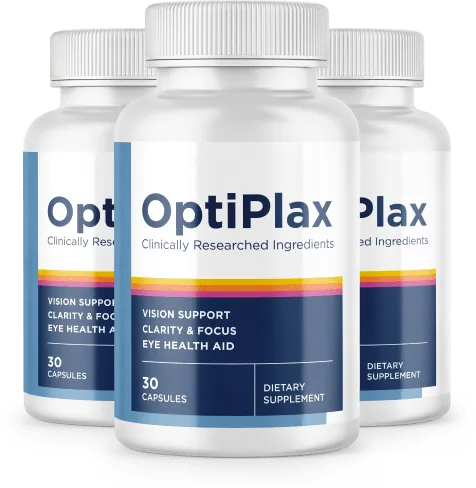 $207
3 bottles ("2+1") · 90 days · about $2.30 a day
$69 per bottle
Free US shipping
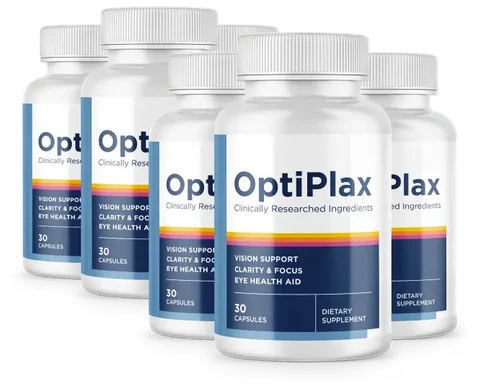 $294
6 bottles ("3+3") · 180 days · about $1.63 a day
$49 per bottle
Free US shipping
+ 3 free digital bonus guides

Which kit? Two bottles cost $49 less than three but add $9.99 shipping, so the three-bottle kit wins for most first-time buyers; six at $49 each is the lowest cost per day once you know the capsule agrees with you.
Payment is one-time, no rebill. Canada, the UK, Ireland, Australia and New Zealand pay $15.95 shipping and wait 10 to 15 business days [2].
The 60-Day Guarantee, Step by Step
The official page promises a full refund within 60 days of your order, opened bottles included. The condition that matters: all the bottles go back, empty or full, with the packing slip [2]. Expect to pay the return postage yourself.
- Keep the packing slip and the box; the clock runs from the order date, not from your first capsule.
- Start the day it arrives and write your week-0 note, so the week-7 check falls inside day 60.
- Not satisfied? Contact support through the official site by day 50 with your order number.
- Ship every bottle back with the packing slip, tracked. Keep the receipt until the refund posts.
How to make sure you are on the real OptiPlax site
Searching the brand name turns up look-alike domains. The real order page has three tells: checkout by BuyGoods, the distributor OptiPlax, Tallmadge, OH, and exactly these kits: 2 bottles for $158, 3 for $207, 6 for $294. A single-bottle offer or a "subscribe and save" box means you are not on the official store.
Who OptiPlax Suits, and Who Should Talk to a Doctor First
A reasonable fit if you
- Are over 50, spend hours a day on screens or close work, and your eyes feel heavy by evening.
- Have had a recent dilated eye exam with nothing that needs medical care.
- Have a healthy thyroid, take no blood thinner, and eat seafood without trouble.
- Prefer one capsule a day and a one-time purchase.
Talk to a doctor first if you
- Have any thyroid history, are pregnant or nursing, or are under 18: see the iodine box above.
- Take a blood thinner or have an autoimmune disease: see the interactions table below.
- Have a seafood, seaweed or iodine allergy, or avoid gelatin.
What to do alongside OptiPlax
The low-tech list beats any capsule: a dilated exam every 1 to 2 years after 60 [11], current reading glasses, a 20-second look into the distance every 20 minutes at the screen, a brighter lamp, sunglasses outdoors.
OptiPlax Side Effects and Medication Interactions After 50
The maker publishes no side-effect data, so this comes from the ingredients. The likely effects are mild and digestive: a faint sea taste, mild nausea or loose stool in the first days. None of the nine is a stimulant, so an evening dose is fine.
The effect to respect is the iodine (full box above). A racing heart, weight change, new fatigue or feeling too hot or too cold within weeks of starting means stop and ask your doctor for a thyroid blood test [7].
| Medication or condition | Ingredient to flag | Why ask your doctor or pharmacist |
|---|---|---|
| Levothyroxine, methimazole, any thyroid disease | Kelp, wakame, Ecklonia cava, nori | Unlisted iodine can change thyroid hormone levels [6][7]. |
| Warfarin, apixaban, rivaroxaban, clopidogrel, daily aspirin | Spirulina | Harvard Health notes spirulina can interfere with blood clotting [13]; show the full label to your pharmacist before starting. |
| Autoimmune disease | Spirulina | Harvard Health notes spirulina may worsen symptoms of an autoimmune disorder and may interact with some medications [13]. |
| Pregnancy, nursing, under 18 | Whole formula | Ask a physician first; see the iodine box [6]. |
Statements on this page have not been evaluated by the Food and Drug Administration. OptiPlax is a dietary supplement and is not intended to diagnose or prevent any disease.
OptiPlax vs Visium Pro: Seaweed Blend or Vitamin Formula?
The two take opposite approaches. Visium Pro is a one-capsule vitamin formula: seven vitamins and minerals with amounts printed, plus a 351 mg proprietary blend. OptiPlax prints no vitamins: nine algae and plant ingredients in a 500 mg blend, astaxanthin as the headline. Want a label you can hold against the AREDS2 research? Our Visium Pro review (rated 4.2) is the closer match. Want the simplest routine, no stimulants and the one ingredient in this formula with trials on screen-tired eyes? OptiPlax is the stronger pick, which is why it scores higher despite the unlisted doses.
Frequently Asked Questions About OptiPlax
Does OptiPlax work for tired eyes?
No study has tested OptiPlax itself, so nobody can promise it will. The one ingredient with human trials on tired, screen-strained eyes is astaxanthin, at 4 or 12 mg a day, and by the label math this blend holds less than 3.4 mg. That makes it a reasonable 60-day try with the refund in place, not a replacement for glasses or an eye exam.
What are the ingredients in OptiPlax, and does it contain lutein?
A 500 mg proprietary blend of nine algae and plant ingredients: kelp powder, wakame extract, astaxanthin 2% (Haematococcus pluvialis), chlorella, Ecklonia cava extract, kelp extract (Laminaria japonica, 10% fucoxanthin), nori yaki, spirulina and sea buckthorn oil, in a gelatin capsule with brown rice flour and silicon dioxide. No lutein, zeaxanthin, bilberry or saffron.
Why doesn't OptiPlax list the dose of each ingredient?
Because it is sold as a proprietary blend, which FDA rules allow: the label gives the total (500 mg) and the order by weight, not the amount of each. By that order, astaxanthin cannot exceed about 3.4 mg; eye fatigue trials used 4 mg or 12 mg a day.
Is OptiPlax safe for people with thyroid problems? Does it contain iodine?
Four seaweeds (kelp, listed twice, wakame, Ecklonia cava and nori) make up most of the blend, and the label gives no iodine amount. If you take levothyroxine or have any thyroid history, show the label to your doctor before ordering; the iodine box above explains why.
Can I take OptiPlax with blood thinners or other medications?
Ask your doctor or pharmacist first and show them the full label. Harvard Health notes that spirulina can interfere with blood clotting, may worsen symptoms of an autoimmune disorder and may interact with some medications, and the iodine in the seaweeds can affect thyroid medication. No study has tested the finished formula with any medicine.
Is OptiPlax vegan, and is it safe with a seafood allergy?
No: the capsule shell is gelatin. The ingredients are sea plants and algae, not fish or shellfish, but anyone with a seafood, seaweed or iodine allergy should check with a doctor first. The label lists no soy, dairy, gluten or nuts.
How long does it take to notice a difference?
Nobody can promise a date: the finished product has no study, and the astaxanthin trials on tired eyes ran about four weeks. Compare how your eyes feel before you start and at weeks 4 and 7, inside the 60-day refund window. It does not change your glasses prescription.
Is OptiPlax sold on Amazon, and how do I find the official website?
No. The maker sells only through its own site, with checkout by BuyGoods, in exactly three kits: 2 bottles for $158 plus $9.99 shipping, 3 for $207 and 6 for $294 with free US shipping. A page selling a single bottle or a subscription is not the official store.
How does the 60-day money-back guarantee work?
You have 60 days from delivery, and opened bottles qualify. Return all the bottles with the packing slip at your own postage, after contacting support through the official site with your order number by about day 50. The step-by-step is in the guarantee section above.
Our Verdict: Is OptiPlax Worth Trying?
4.7 out of 5. OptiPlax earns its score on simplicity and fair terms: one capsule a day, astaxanthin where the evidence on tired eyes is, no stimulant, one-time payment, a 60-day guarantee that covers opened bottles, a distributor with a street address. What holds it back: hidden doses, unmeasured iodine from four seaweeds, a gelatin capsule and shipping on the two-bottle kit.
Over 50, screen-tired by evening, recently examined, healthy thyroid, no blood thinner? OptiPlax is a sensible 60-day try, taken with a meal, with a week-0 note in a drawer so you can judge it honestly at week 7.
★★★★★★★★★★ 4.7/5, Active Health Guide editorial score
Free US shipping on the 3 and 6 bottle kits · no subscription
How We Evaluated OptiPlax
| What we checked | How we checked it | What we found |
|---|---|---|
| Who sells it | Official order page and checkout | Official site; BuyGoods; OptiPlax, Tallmadge, OH Verified |
| Real price today | Official order page, October 20, 2026 | $158 (plus $9.99 shipping), $207, $294 Verified |
| Subscription or rebilling | Order page and terms | One-time payment Verified |
| Refund terms | Guarantee text | 60 days; all bottles back with packing slip; return postage not covered Judgment call |
| Full ingredient list | Supplement Facts panel | Nine ingredients, 500 mg blend, no individual doses Verified |
| Iodine content | Label | Not declared Not published |
| Study of the finished formula | PubMed, brand's pages | None Not published |
| Research on the ingredients | PubMed, NIH ODS, NEI, AAO | Trials for astaxanthin and sea buckthorn oil at doses the label cannot confirm Judgment call |
| Manufacturing claims | Label wording | GMP, Made in USA, FDA-registered facility, per the maker Judgment call |
| Did our team use OptiPlax? | Editorial analysis only | No Not performed |
Sources
- OptiPlax official label: Supplement Facts panel, other ingredients, suggested use, caution and distributor address, read October 20, 2026.
- OptiPlax official order page: kit prices, shipping terms and 60-day guarantee wording, read October 20, 2026 (cited as text only).
- US Food and Drug Administration. Dietary Supplement Labeling Guide, Chapter IV: Nutrition Labeling (proprietary blends: total weight, descending order): fda.gov
- Giannaccare G, et al. Clinical Applications of Astaxanthin in the Treatment of Ocular Diseases: Emerging Insights. Marine Drugs, 2020 (section on asthenopia; 4 mg or 12 mg daily for 28 days): pmc.ncbi.nlm.nih.gov/PMC7281326
- Larmo PS, et al. Oral sea buckthorn oil attenuates tear film osmolarity and symptoms in individuals with dry eye. Journal of Nutrition, 2010: pubmed.ncbi.nlm.nih.gov/20554904
- National Institutes of Health, Office of Dietary Supplements. Iodine: Fact Sheet for Health Professionals (RDA, upper level, kelp variability): ods.od.nih.gov
- American Thyroid Association. Iodine Deficiency (including excess iodine and thyroid disease): thyroid.org
- American Academy of Ophthalmology. What Are Drusen?: aao.org
- National Eye Institute. Age-Related Macular Degeneration (AMD): nei.nih.gov
- National Eye Institute. Age-Related Eye Disease Studies (AREDS/AREDS2): nei.nih.gov
- National Eye Institute. Get a Dilated Eye Exam: nei.nih.gov
- MedlinePlus (NIH). Eye emergencies: medlineplus.gov
- Harvard Health Publishing. By the way, doctor: Is spirulina good for you?: health.harvard.edu
- US Food and Drug Administration. FDA 101: Dietary Supplements: fda.gov