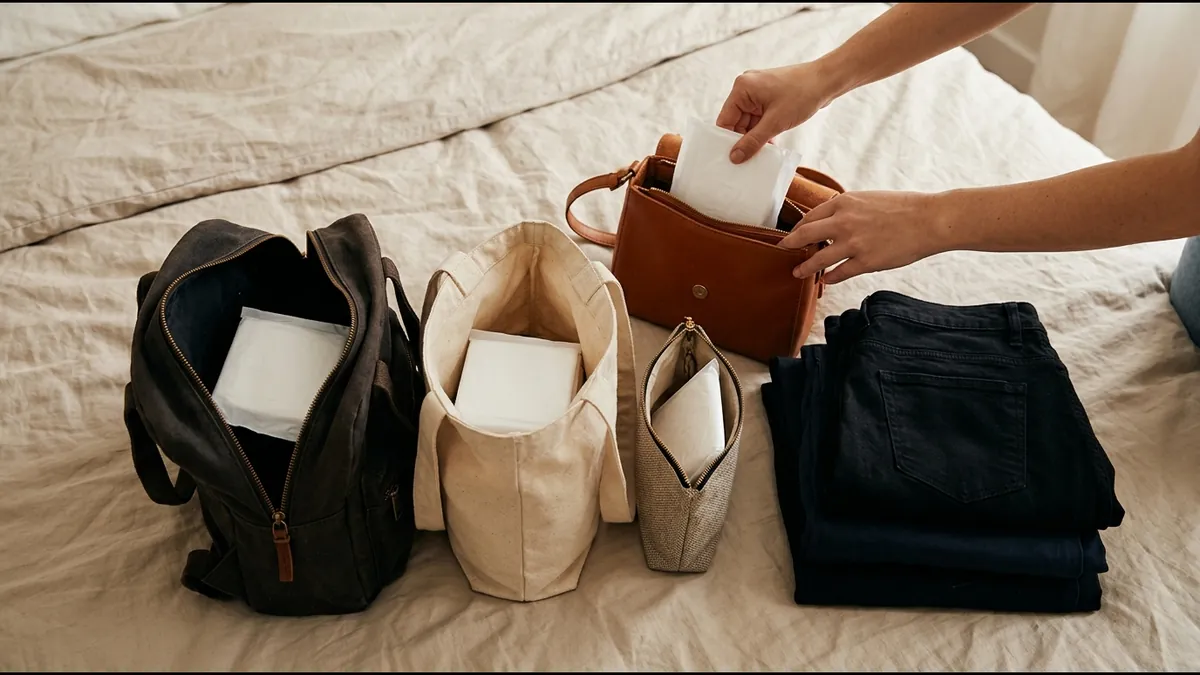
Dark pants only. A spare pad in every bag. A mental map of every bathroom between your house and anywhere you go. You laugh with your legs crossed, and you skipped the movies because two hours is too long. And every month you buy another pack of pads, which fixes exactly nothing. The pad hides the leak. It does not touch the reason.
What the pad aisle can't do for you: many bladder leaks can improve with steps you take at home. Here are seven steps with real evidence, and the piece almost nobody talks about.
This is an affiliate link. We may earn a commission at no extra cost to you.
Do natural steps come before surgery for bladder leaks?
Yes: for most women with leaks, surgery is meant to come last. The National Institutes of Health lists it as a "last resort," after habit changes, pelvic floor training and other options. That order exists because the first steps work often enough: in a Cochrane review of 31 trials, women with stress leaks who trained their pelvic floor were eight times more likely to report that their stress leaks had cleared up than women who did nothing, 56% versus 6%. One caveat: these steps do not work for everyone, and blood in your urine, burning, fever or a sudden leak are not "try harder at home" problems.
First, which kind of leak do you have?
The type of leak decides which steps matter most. In the latest national survey (NHANES 2015 to 2018), 61.8% of adult American women reported some leakage, about 78 million women. Among them, 37.5% had stress leaks, 22.0% urgency leaks and 31.3% both.
- Stress leaks: a squirt when you sneeze, cough, laugh, lift or jump. Pressure beats a weak floor.
- Urgency leaks: the urge hits like an alarm and you do not make it in time. Also called overactive bladder.
- Mixed: both.
What are the natural ways to stop bladder leaks?
Seven steps have research behind them: bladder training, the "knack," pelvic floor work done right, weight loss, cutting irritants, fixing constipation and the right amount of water.
1. Train your bladder on a clock, not on the urge
An overactive bladder learns to scream "full" when it is not. Bladder training can help ease that. Mayo Clinic describes it: keep a diary for a few days, find your usual gap between trips, then add 15 minutes, and 15 more when that feels easy, until you can wait two to four hours. When an urge hits off schedule, stand still, breathe slowly, squeeze a few times and let the alarm pass.
2. Learn the "knack": squeeze before you sneeze
The simplest step on the list, and almost never taught. University of Michigan researchers taught women with mild to moderate stress leaks to tighten their pelvic floor right before and during a cough. When they were re-tested, they lost much less urine on a medium cough, and noticeably less on a deep one. Feel the sneeze coming, squeeze, then sneeze. Same for a laugh or a lift.
3. Do pelvic floor work right, ideally with a physical therapist
Kegels get told to every woman and taught to almost none. A Sutter Health urogynecologist puts it bluntly: women who bear down instead of lifting "may cause more damage to what you are trying to fix," and a fair trial takes three months. Mayo's version: squeeze as if stopping your stream for three seconds, relax for three, repeat, three or four sets a day. Breathe. Do not clench your thighs.
The twist the National Association for Continence raises: some women with urgency leaks have a pelvic floor that is too tight, not too weak, and more squeezing makes it worse. A pelvic floor physical therapist can tell in one visit. If months of Kegels gave you nothing, read why Kegels sometimes do not work first.
4. Lose some weight, if you carry extra
Every pound on your belly presses on your bladder. In the PRIDE trial, in the New England Journal of Medicine, overweight women who lost an average of 8% of their body weight (about 17 pounds) in six months cut their weekly leaks by 47%; the group that lost almost nothing cut them by 28%. The effect was clearest for stress leaks.
5. Cut the bladder irritants for one week
Coffee, tea, cola, sparkling water, alcohol and chocolate can all make your bladder twitchy. Mayo Clinic suggests a test: drop them all for about a week, then add one back every day or two and watch your trips. Alcohol also increases how much urine you make, according to the NIH.
6. Fix constipation, because straining wrecks the floor
A full bowel presses on the bladder, and straining on the toilet damages the muscles you are trying to strengthen, Mayo Clinic says. The NIH lists long-lasting constipation among the problems that raise the risk of leaks. Fiber, water and daily movement are the fix.
7. Drink water in the right measure, at the right time
Your instinct says drink less. Your bladder disagrees. Mayo Clinic explains that too little fluid concentrates your urine, which irritates the bladder and increases the urge. Many women with leaks quietly cut back on water, hoping to leak less, and end up with a more irritated bladder. Drink normally in the morning and afternoon, taper off a few hours before bed, and aim for pale yellow urine. And if you smoke, you cough more; Mayo lists smoking among the things that worsen leaks.
Which natural step helps which kind of leak?
Stress leaks respond best to the knack, pelvic floor training and weight loss; urgency leaks to bladder training and cutting irritants; mixed leaks need both.
| Step (what it is) | Best for | What research says |
|---|---|---|
| Bladder training: bathroom on a schedule, adding 15 minutes at a time | Urgency, mixed | Mayo Clinic: goal of 2 to 4 hours between trips |
| The "knack": squeeze right before a cough, sneeze or lift | Stress | University of Michigan: much less leakage on a cough when women squeezed first |
| Pelvic floor training: correct squeezes, 3 to 4 sets a day, checked by a physical therapist | Stress, mixed; urgency if the floor is too tight | Cochrane, 31 trials: 56% said leaks cleared up vs 6% untreated |
| Weight loss: about 8% of body weight in the PRIDE trial | Stress, mixed | PRIDE trial: 8% loss cut weekly leaks by 47% |
| Cut irritants: a week without caffeine, alcohol, bubbles, chocolate | Urgency | Mayo Clinic, NIH: may reduce urges; varies by woman |
| Fix constipation: fiber, water, movement; no straining | All types | NIH: constipation raises the risk; Mayo: straining damages the floor |
| Fluids in the right measure: normal intake, earlier in the day | All types, night trips | Mayo Clinic: too little fluid irritates the bladder |
Why do some women do all of this and still leak?
Because a bladder is not only a muscle. It is three systems: the muscles that hold the door shut, the hormones that keep the tissue springy, and the environment inside the bladder itself. Everything above works on the first. Falling estrogen after menopause can thin the lining of the urethra and bladder; that is the second, for your doctor. The third is the one almost nobody mentions.
The piece almost nobody mentions: your bladder has its own bacteria
For a century, medicine taught that healthy urine is sterile. It is not. Researchers at Loyola University in Chicago showed that the female bladder carries its own community of living bacteria, now called the urinary microbiome or "urobiome." A 2020 study from that group compared women with and without leaks: the leaking women had a different bacterial mix, and the more living microbes detected, the worse the incontinence tended to be.
Why would bacteria matter? The working idea is that an out-of-balance bladder environment keeps the lining irritated, and an irritated bladder squeezes when it should rest. That is urgency. It may also help explain why leaks and infections travel together: Harvard Health notes that women with incontinence are at greater risk of bladder infections. If you get a UTI every few months, read the connection between bladder leaks and frequent UTIs.
Be clear-eyed. The science is young. Nobody has proven that changing the bladder's bacteria stops leaks, and no supplement, probiotic or cranberry product has that evidence yet. What the research does say is that the old picture, "weak muscle, do your Kegels," was incomplete. If you have done the whole list and still leak, the bladder environment is a fair next question for your doctor.
What about the pads?
Pads are fine as a bridge and a trap as a lifestyle. There is no good evidence that pads cause leaks, but with a pad on, you stop counting leaks and stop mentioning it to anyone. Many women with bladder leaks never mention them to a doctor. The NIH says leaks are common but "not a routine part of being a woman or getting older." Wear the pad while you do the work, keep a two-week diary, and let the numbers talk.
When natural steps are not enough: talk to your doctor
Some leaks need a doctor before any home step. This article is informational, not medical advice.
⚠️ See a doctor first, and do not wait for home steps, if you have:
- Blood in your urine, even once.
- Strong pain or burning when you urinate.
- Fever or chills with bladder symptoms.
- Pain in your lower back or side.
- A leak that started suddenly, or got much worse in days.
- Any loss of bowel control.
Start with your primary care doctor; the specialists are a urogynecologist or urologist, and a pelvic floor physical therapist for the muscle side.
You have organized your life around a bathroom map for long enough. Start with the knack today.
Frequently asked questions about stopping bladder leaks naturally
What can women try for bladder leaks before surgery?
Habit changes and pelvic floor training come first. The National Institutes of Health lists surgery as a last resort, after habit changes and pelvic floor training. In a Cochrane review of 31 trials, 56% of women with stress leaks who trained their pelvic floor reported their leaks had cleared up, against 6% who did nothing. Natural steps do not help everyone, so a doctor should rule out infection first.
How long should you give natural steps for bladder leaks?
It depends on the step. The "knack" (squeezing before a cough) is a skill you can practice from the first day. Bladder training takes weeks. Pelvic floor training deserves a fair three months. In the PRIDE trial, weight loss was measured at six months.
Does drinking less water stop bladder leaks?
Usually not, and it can backfire. Mayo Clinic explains that too little fluid concentrates urine, which irritates the bladder and increases the urge. Drink normally in the morning and afternoon, stop a few hours before bed, and limit caffeine and alcohol.
Are bladder leaks a normal part of aging for women?
No. Leaks are common, with research estimating about half of American women experience them, but the National Institutes of Health states that urinary incontinence is not a routine part of being a woman or getting older. Common is not normal.
Do pads make bladder leaks worse?
There is no good evidence that pads cause leaks. What pads do is hide the problem: they manage the symptom while the cause goes untreated, and many women with leaks never mention it to a doctor. Use them while you work on the steps above.
Sources
- NIDDK (NIH), Treatment for Bladder Control Problems (Urinary Incontinence): niddk.nih.gov
- NIDDK (NIH), Definition & Facts for Bladder Control Problems: niddk.nih.gov
- Patel UJ et al., Updated Prevalence of Urinary Incontinence in Women: 2015-2018 National Population-Based Survey Data, Female Pelvic Med Reconstr Surg, 2022: PubMed
- Dumoulin C et al., Pelvic floor muscle training versus no treatment, or inactive control treatments, for urinary incontinence in women, Cochrane Database of Systematic Reviews, 2018: PubMed
- Miller JM, Ashton-Miller JA, DeLancey JO, A pelvic muscle precontraction can reduce cough-related urine loss in selected women with mild SUI ("the Knack"), J Am Geriatr Soc, 1998: PubMed
- Subak LL et al., Weight loss to treat urinary incontinence in overweight and obese women (PRIDE), N Engl J Med, 2009: PubMed
- Mayo Clinic, Bladder control: Lifestyle strategies ease problems: mayoclinic.org
- Sutter Health, Kegel Exercises for Urinary Incontinence: sutterhealth.org
- National Association for Continence, Why Kegels Don't Work: nafc.org
- Bladder Bacterial Diversity Differs in Continent and Incontinent Women: A Cross-Sectional Study, Am J Obstet Gynecol, 2020: PMC
- Harvard Health Publishing, Ask the doctor: What can I do about bladder infections?: health.harvard.edu